
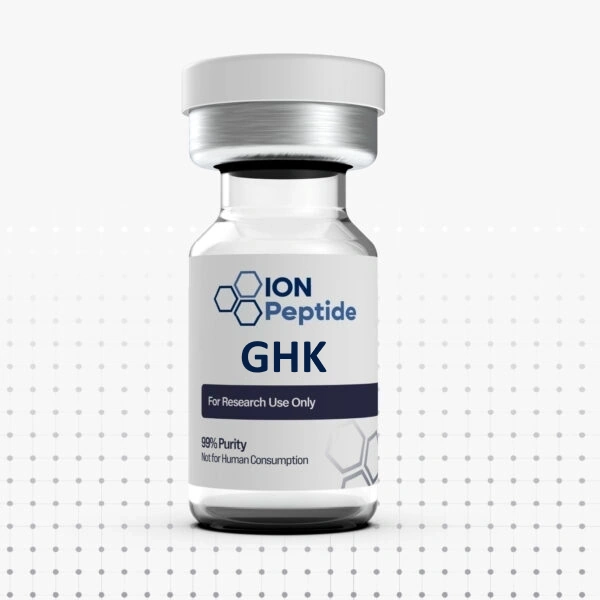
When evaluating ghk-cu for research purposes, quality verification and transparent batch documentation are important parts of responsible compound assessment. Ion Peptide emphasizes the value of traceable analytical records, clearly identified production lots, and appropriate laboratory testing. Ion Peptide also recognizes that ghk-cu should be evaluated through documented analytical evidence rather than promotional claims alone. For this reason, Ion Peptide focuses on quality documentation that helps researchers understand the identity, purity, batch information, and analytical characteristics associated with a research compound.
Understanding ghk-cu Quality Verification
Quality verification involves several analytical considerations rather than relying on a single percentage or laboratory result. A complete evaluation may consider molecular identity, chromatographic purity, assay or content, related substances, and other characteristics relevant to the material and intended research use.
For ghk-cu, documentation should clearly distinguish between different quality attributes. A purity result, for example, does not automatically prove molecular identity, sterility, or endotoxin status. Each characteristic requires an appropriate analytical approach.
Why Analytical Testing Matters
Analytical testing provides measurable evidence about a particular material. Depending on the compound and testing objectives, laboratories may use techniques such as high-performance liquid chromatography, mass spectrometry, spectroscopy, or other validated analytical procedures.
A strong ghk-cu quality record should explain which methods were used and what the results demonstrate. This makes the documentation easier for qualified researchers to interpret and compare.
The Importance of Detailed Batch Documentation
Batch documentation creates a connection between the physical material and its analytical history. Instead of presenting generic information about a product category, batch-specific records identify the particular production lot being evaluated.
Ion Peptide can use batch documentation to organize important information such as lot identification, testing dates, analytical findings, and relevant specifications. This type of record helps establish traceability throughout the quality-control process.
Batch or Lot Numbers
A batch number is one of the most important identifiers on a Certificate of Analysis. The number should correspond to the material being evaluated.
When reviewing ghk-cu documentation, researchers should confirm that the lot number on the certificate matches the lot number on the associated product documentation. A mismatch can make it difficult to determine whether the reported analytical results apply to the material in question.
Testing Dates
Testing dates can provide additional context. A CoA should clearly indicate when the analytical assessment was conducted, particularly when documentation is being reviewed alongside a specific production batch.
The combination of batch number, testing date, laboratory information, and analytical method creates a stronger traceability record than an undated quality statement.
Identity Verification for ghk-cu
Identity testing addresses whether the material corresponds to the compound described in the documentation. Mass spectrometry is commonly used for molecular-mass confirmation and can provide useful evidence supporting peptide identity.
For ghk-cu, identity information should be considered separately from purity information. A chromatographic purity percentage indicates the distribution of detected components under a particular analytical method, while identity testing addresses the molecular characteristics of the target compound.
Orthogonal Analytical Methods
Using complementary analytical techniques can provide stronger characterization because different methods measure different properties.
For example, chromatographic analysis can help evaluate separation and purity, while mass spectrometry can support molecular identity. When appropriate, additional analytical methods can provide further evidence about the material.
Ion Peptide can incorporate this principle into its documentation by presenting quality information in a way that separates individual analytical attributes rather than combining them into one general quality statement.
Purity Analysis and Related Substances
Purity analysis is another important component of research-compound documentation. HPLC and related chromatographic techniques can separate components and help determine the relative proportion of detected substances.
However, a high ghk-cu purity percentage should not be interpreted as proof of every other quality characteristic. The analytical method, chromatogram, specification, and reporting procedure all influence how the result should be understood.
Understanding Chromatographic Purity
Chromatographic purity generally describes the proportion of components detected by the selected chromatographic method. Different analytical conditions can produce different profiles, which is why the method itself matters.
Researchers reviewing ghk-cu documentation should therefore look beyond the headline percentage and examine the supporting analytical information whenever available.
Independent Verification and Laboratory Testing
Independent laboratory testing can provide an additional layer of confidence because analysis is performed by an organization separate from the supplier or manufacturer.
For Ion Peptide, independent verification can help demonstrate that a particular batch has been assessed using defined analytical procedures. The usefulness of third-party testing is greatest when the laboratory identity, batch number, testing date, methods, and results are clearly documented.
What to Look for in an Independent Report
A useful laboratory report may include:
- Compound identification
- Batch or lot number
- Testing date
- Analytical methodology
- Chromatographic results
- Identity results
- Purity or assay findings
- Relevant impurity information
- Laboratory identification
- Acceptance criteria where applicable
Researchers should be cautious about documents that simply state “third-party tested” without providing sufficient information to understand what was tested and how the result was obtained.
Certificate of Analysis for ghk-cu
A Certificate of Analysis, or CoA, is an important document for connecting quality-control results to a specific batch. It can summarize the analytical procedures and results obtained during testing.
For ghk-cu, a useful CoA should be batch-specific and provide enough information to allow an informed review. The document should identify the compound, production lot, analytical tests, results, and relevant specifications.
Ion Peptide can strengthen its quality documentation by ensuring that certificates remain clear, organized, and traceable. Researchers can then evaluate the information without confusing general product descriptions with batch-specific evidence.
Why Batch-Specific Certificates Matter
A generic certificate may describe a typical product specification but does not necessarily demonstrate the characteristics of every individual batch.
A batch-specific ghk-cu CoA provides more useful information because it associates analytical findings with a defined production lot. This distinction is important when evaluating consistency between different batches.
Purity Does Not Equal Sterility
Another important consideration is the difference between chemical purity and microbiological quality. A purity test does not automatically demonstrate sterility.
Sterility testing and endotoxin testing are separate analytical procedures designed to address different questions. Whether these tests are relevant depends on the intended research application and applicable quality requirements.
Therefore, Ion Peptide documentation should clearly identify which tests were performed rather than implying that one result establishes unrelated quality characteristics.
Reviewing Storage and Handling Information
Quality documentation can also include information related to storage and handling. Peptides may require controlled environmental conditions to help preserve their characteristics during storage.
For ghk-cu, researchers should follow the documented storage instructions associated with the specific material. Factors such as temperature, moisture, light exposure, container integrity, and handling practices may affect stability.
Maintaining Traceability After Testing
Quality control does not end when laboratory analysis is completed. Records should remain associated with the appropriate batch throughout storage and distribution.
A clear documentation system allows researchers and quality personnel to connect the material, batch number, analytical report, and relevant handling information.
Building a Transparent Quality Framework
A comprehensive quality framework combines manufacturing records, analytical testing, batch identification, independent verification, and documentation review.
For Ion Peptide, a structured approach can help organize ghk-cu information into distinct quality categories. This allows researchers to understand what has been tested, which laboratory performed the analysis, and which batch the results represent.
A Practical Documentation Checklist
When reviewing ghk-cu quality documentation, researchers can consider the following:
- Is the compound clearly identified?
- Is the batch or lot number visible?
- Does the CoA correspond to the specific batch?
- Is the testing date provided?
- Is the analytical laboratory identified?
- Are the testing methods described?
- Is identity testing documented?
- Is purity analysis provided?
- Are relevant impurities addressed?
- Are additional tests clearly separated from purity testing?
This checklist can make documentation review more systematic and reduce confusion between different analytical characteristics.
Frequently Asked Questions
1. What is ghk-cu quality verification?
ghk-cu quality verification is the process of evaluating documented analytical evidence concerning characteristics such as identity, purity, assay, and relevant impurities. The exact testing program depends on the material and intended research requirements.
2. Why is batch documentation important?
Batch documentation connects analytical results to a specific production lot. It improves traceability and helps researchers determine whether a Certificate of Analysis actually applies to the material being reviewed.
3. Does high purity confirm identity?
No. Purity and identity are separate characteristics. A purity result should be interpreted alongside appropriate identity testing and supporting analytical documentation.
4. What should a ghk-cu Certificate of Analysis contain?
A useful CoA can include the compound name, batch number, testing date, analytical methods, identity results, purity findings, relevant specifications, and laboratory information. Batch-specific documentation is particularly valuable.
5. Why use independent laboratory verification?
Independent verification provides an external assessment of a defined batch. When laboratory information and analytical results are transparent, third-party testing can provide additional evidence for quality evaluation.
Conclusion
Detailed quality verification and batch documentation provide a stronger foundation for evaluating research compounds. ghk-cu should be assessed using appropriate analytical evidence, clear batch identification, documented testing methods, and traceable Certificates of Analysis.
Ion Peptide supports the principle that quality information should be transparent and understandable. By separating identity, purity, assay, impurity, and microbiological characteristics, researchers can make more informed evaluations of available documentation. Ultimately, Ion Peptide quality records are most useful when they connect clearly to a specific batch and explain what each analytical result actually demonstrates.