Understanding RO4350B Material Properties
RO4350B is a specialized PCB material renowned for its outstanding performance in high-frequency applications. This material is manufactured by Rogers Corporation and is favored in the electronics industry for its unique properties that enable superior RF (Radio Frequency) signal integrity. With advancements in technology, the demand for high-frequency PCBs has surged, making understanding the properties of RO4350B essential for manufacturers and engineers alike. When exploring options, RO4350B PCB manufacturing provides comprehensive insights on this material and its applications.
What is RO4350B and Its Applications?
RO4350B is a hydrocarbon/ceramic laminate designed specifically for RF and microwave applications. Its dielectric constant of 3.48 makes it ideal for high-frequency circuits, enabling manufacturers to produce PCBs that are both reliable and efficient. Applications span across various industries, including telecommunications, aerospace, military, and consumer electronics. For instance, RO4350B is commonly used in the creation of amplifiers, antennas, and other critical components that necessitate minimized signal loss and enhanced performance.
Electrical Characteristics of RO4350B
The electrical characteristics of RO4350B set it apart from other PCB materials. One of its most notable features is its low dielectric loss, which results in lower insertion loss and better signal propagation. Additionally, RO4350B demonstrates a consistent dielectric constant across a variety of frequencies, providing stability in performance. The thermal coefficient of expansion (TCE) is also noteworthy, ensuring compatibility with traditional copper substrates while maintaining its mechanical integrity under varying temperature conditions.
Comparing RO4350B with Other PCB Materials
When compared to traditional FR-4 materials, RO4350B offers significant advantages for high-frequency applications. While FR-4 may be sufficient for low-frequency applications, issues such as higher loss and inconsistent dielectric properties make it less reliable for RF signals. Materials like PTFE (Polytetrafluoroethylene) are also used in high-frequency applications; however, they can be more expensive and challenging to process compared to RO4350B. Thus, RO4350B strikes a balance between performance and manufacturability, making it a preferred choice for many PCB manufacturers.
Challenges in RO4350B PCB Manufacturing
While RO4350B offers notable advantages, manufacturing PCBs from this material is not without its challenges. Understanding these challenges is crucial for ensuring high-quality production and minimizing costs.
Common Manufacturing Obstacles
One of the primary challenges in RO4350B PCB manufacturing is its complex processing requirements. Unlike standard FR-4 materials, the laminating process for RO4350B requires precise temperature and pressure control to achieve optimal bonding. Additionally, the material’s sensitivity to humidity and temperature fluctuations necessitates strict environmental controls during production.
Quality Control Measures for RO4350B PCBs
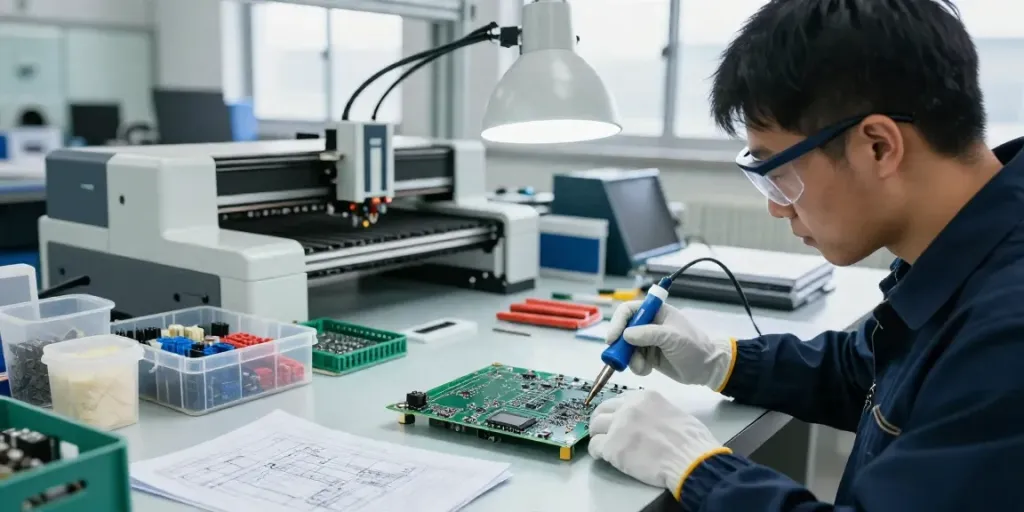
To address the challenges associated with RO4350B manufacturing, comprehensive quality control measures must be implemented. This includes rigorous testing for parameters such as dielectric constant, loss tangent, and dimensional stability. Manufacturers may also employ automated optical inspection (AOI) systems and electrical testing to ensure that each PCB meets specifications before delivery.
Addressing Misconceptions About RO4350B
There are several misconceptions surrounding the use of RO4350B in PCB manufacturing. Many believe that it is exclusively suitable for high-end applications, resulting in missed opportunities for moderately priced projects. In reality, RO4350B can provide cost-effective solutions without sacrificing performance, even for consumer-grade electronics.
Best Practices in RO4350B PCB Production
Implementing best practices in the production of RO4350B PCBs can enhance efficiency and boost overall performance.
Optimizing Design for High-Frequency Performance
To maximize the advantages of RO4350B, designers must consider high-frequency principles during the layout phase. This includes minimizing trace lengths, using controlled impedance routes, and implementing ground planes effectively to reduce electromagnetic interference (EMI). By carefully planning the PCB layout, manufacturers can significantly enhance the performance of the final product.
Advanced Techniques for Efficient Manufacturing
Advanced manufacturing techniques such as laser drilling and microvias can improve the capabilities of RO4350B PCBs. Laser drilling allows for the creation of smaller vias and finer traces, resulting in denser circuits. Additionally, using automated fabrication processes can significantly increase production rates while maintaining quality standards.
Case Studies of Successful RO4350B Implementations
Numerous case studies highlight successful applications of RO4350B in various industries. For instance, in the telecommunications sector, companies have utilized RO4350B to produce antennas that operate efficiently at frequencies exceeding 5 GHz. Similarly, aerospace and military organizations benefit from the material's stability and reliability in high-performance applications, leading to enhanced operational effectiveness.
Future Trends in PCB Manufacturing for 2026
As the demand for high-frequency and high-reliability PCBs continues to grow, several trends are likely to shape the future of RO4350B manufacturing in 2026.
Emerging Technologies Impacting RO4350B Production
Innovations in materials science and manufacturing technologies are set to impact RO4350B production positively. Emerging processes such as 3D printing and additive manufacturing could offer new methods for creating complex geometries while reducing waste. Additionally, new chemical formulations may enhance the material properties of RO4350B, enabling even better performance for high-frequency applications.
Sustainability Practices in PCB Manufacturing
As sustainability becomes a priority across industries, PCB manufacturers are increasingly adopting eco-friendly practices. This includes utilizing recyclable materials in conjunction with RO4350B and implementing waste-reduction initiatives throughout the manufacturing process. Manufacturers who commit to sustainable practices may find new market opportunities and enhance their brand reputation.
Market Predictions for High-Frequency PCBs
Market analysts predict a continued surge in demand for high-frequency PCBs, primarily driven by advancements in telecommunications, automotive electronics, and IoT devices. The versatility and reliability of RO4350B will position it as a key player in meeting the needs of these industries, paving the way for further innovations and applications.
Measuring Success in PCB Manufacturing
Success in RO4350B PCB manufacturing can be assessed through various metrics that gauge performance, customer satisfaction, and operational efficiency.
Key Performance Indicators for RO4350B Production
Key Performance Indicators (KPIs) such as defect rates, production lead times, and yield rates are essential for assessing the effectiveness of RO4350B manufacturing processes. By tracking these metrics, manufacturers can identify areas for improvement and optimize their operations to enhance profitability.
Customer Satisfaction and Feedback Mechanisms
Gathering customer feedback is critical in the PCB manufacturing industry. Manufacturers can implement surveys and follow-up communications to gauge satisfaction levels and identify potential areas for enhancement. Meeting customer expectations consistently can lead to repeat business and long-term partnerships.
Strategies for Continuous Improvement in Manufacturing
Continuous improvement methodologies such as Six Sigma and Lean manufacturing can be integrated into RO4350B PCB production. These strategies focus on minimizing waste and variability, leading to improved quality and operational efficiency. Companies that embrace these philosophies are often more competitive in the marketplace.
What are the raw materials used in PCB manufacturing?
PCB manufacturing typically utilizes a variety of raw materials, including copper for circuitry, resin for substrate, and various additives to enhance performance. In the case of RO4350B, key ingredients include hydrocarbon resins and ceramic fillers, which together provide the high-frequency characteristics required for its applications.
What is the dielectric constant of Rogers RO4003C material?
Rogers RO4003C has a dielectric constant of approximately 3.38, making it a suitable choice for many RF applications. While it shares some similarities with RO4350B, each material has its unique properties that cater to specific engineering needs.
What is type 3 PCB?
Type 3 PCBs refer to a classification that typically denotes boards made with specific materials and processes that meet certain performance criteria. These criteria can include factors related to thermal management, dimensional stability, and electrical properties, ensuring they can perform reliably in their intended applications.
How much does it cost to get a PCB manufactured?
The cost of PCB manufacturing can vary widely based on several factors, including material type, complexity of the design, and production volume. For RO4350B PCBs, the costs may be higher than standard FR-4 boards due to the advanced materials and processing techniques involved. It is crucial for companies to evaluate their specific needs and seek quotes from multiple manufacturers to find the best balance of quality and cost.